
Food and beverage marketing agency. Built on repeat orders and margin.
Food gets eaten, and it is expensive to ship. That makes repeat purchase a food brand's most important number, and shipping the cost that eats the margin. We run ads, email and tracking with both in mind.
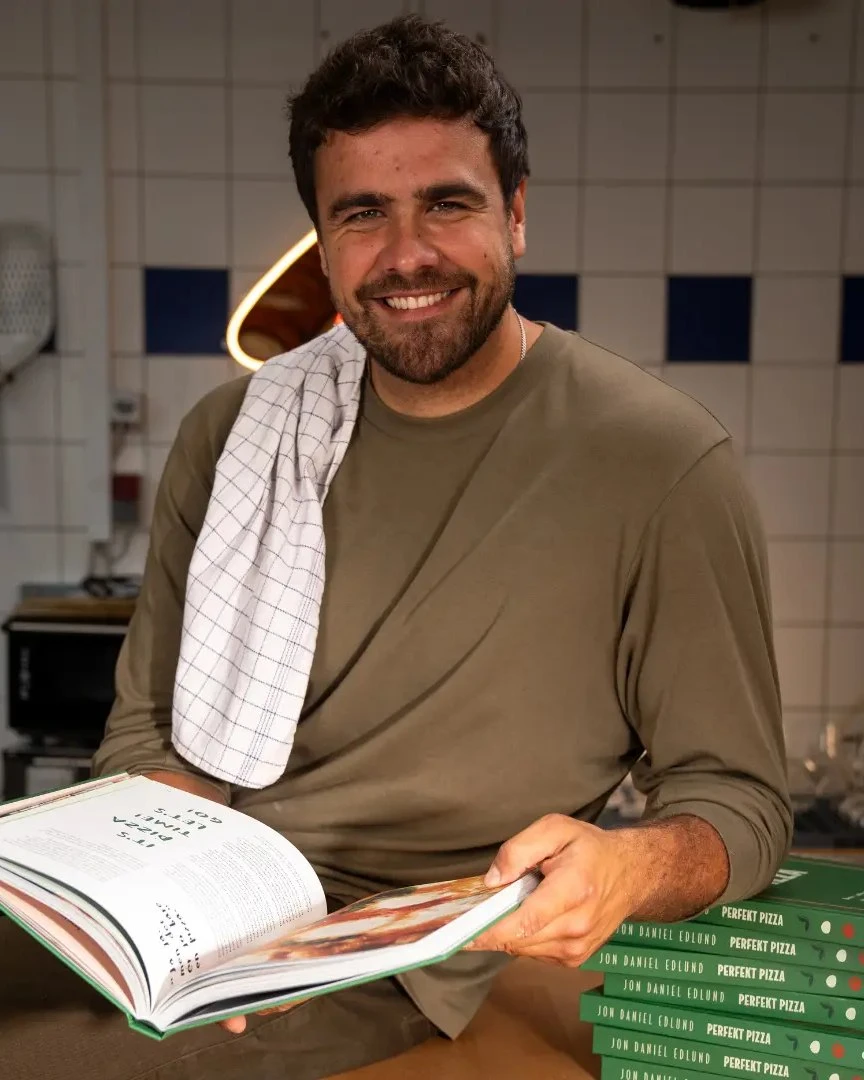
All-in-one growth partner: from WooCommerce to Shopify, with profit growing faster than revenue.
- +88%
- GROSS PROFIT
- 2×
- WEBSHOP REVENUE
- 6.2
- AVG. ROAS ON META
A food brand makes its money on the second order
As a food marketing agency, we run Meta Ads, Google Ads, TikTok Ads, email marketing and tracking for food and drink brands that sell online, steered by what is left once purchasing and shipping are paid. We are a performance agency in Aarhus, Denmark. Our case in the category is Jons Madklub, a webshop for food and speciality goods, where for 14 months, from May 2025 to July 2026, we have run the whole commercial engine together with Jon's own team.
Food differs from most other categories in one way: the product disappears. Flour, coffee, spices and oil get used up at a pace you can calculate. The first order is often bought expensively through an ad. It is the repeat purchase that makes the customer profitable, so we build ads and email as one system.
- The repeat purchase rate, not just the cost of the first order
- Shipping per order, set against the size of the basket
- Shelf life and stock, before a product is advertised
- The delivery day, stated clearly before checkout
- The season, especially gifts and Christmas
Add the five together, and you have the sum every channel has to answer to. An ad that sells a small basket with expensive chilled shipping can look great in Ads Manager and still lose money.
Demand is spread across many small searches
People rarely search for a food webshop. They search for a product, a gift or a recipe, and each category has its own small demand. There is no single big search term for speciality food, but many small ones.
That has two consequences. Google Ads can only catch the demand that already exists, and for most speciality goods it is small. The rest has to be created, and that happens in the feed on Facebook, Instagram and TikTok, where people are not looking for food but like to see it. And because every new customer costs something to find, email has to make sure the customer buys again without a new ad.
Each channel has its job, and the order counts
We start with measurement before we touch the budget, because every other channel optimises on it. Then comes the channel that finds new customers, and the one that brings them back.
| Channel | The job | We steer by |
|---|---|---|
| Tracking & Data | Making the platforms see the right purchases | The orders in Shopify |
| Meta Ads | New customers who were not searching | Margin after shipping |
| Google Ads | The people already looking | Margin, not search volume |
| Email Marketing | The repeat purchase, when the product runs out | Revenue per recipient |
| TikTok Ads | Reach on posts that work | Blended numbers |
- Tracking & Data
- The jobMaking the platforms see the right purchases
- We steer byThe orders in Shopify
- Meta Ads
- The jobNew customers who were not searching
- We steer byMargin after shipping
- Google Ads
- The jobThe people already looking
- We steer byMargin, not search volume
- Email Marketing
- The jobThe repeat purchase, when the product runs out
- We steer byRevenue per recipient
- TikTok Ads
- The jobReach on posts that work
- We steer byBlended numbers
TikTok comes last on purpose. The channel needs a steady flow of new content, and without it the same few videos wear out fast. If you have the flow, TikTok can come earlier. If you do not, Meta Ads and email marketing should run before TikTok goes on.
Revenue can be bought. Gross profit has to be built
The most important thing the Jons Madklub case shows is not an ad figure. Revenue grew 38%, and gross profit grew 88%. Profit has grown faster than the top line, and a large part of the work in the case lay outside the ad account.
We found new suppliers, negotiated purchase prices down substantially and widened the range. Stock moved to a third-party warehouse, and fulfilment was streamlined. Lower purchase prices mean more margin on every product, and the more margin there is, the more an ad can cost before it loses money.
An ad account can move revenue. The margin is in purchasing, shipping and repeat orders.
That does not mean every food brand has to hand us the keys to purchasing. It means we ask about it. If we do not know the margin after shipping, we do not know the ROAS a campaign has to hit either.
Jons Madklub: from a WooCommerce shop to a healthy business
When we started in May 2025, Jons Madklub stood on a weak commercial foundation: an older WooCommerce shop that did not convert, unstable and too-high purchase prices, a narrow range and content production that could not scale.
- Migrated the webshop from WooCommerce to Shopify in three phases
- Built a steady flow of content for paid and organic
- Scaled Meta and Google Ads hand in hand
- Built automated flows and a fixed campaign calendar on email and SMS
- Built an SEO foundation under all of it
- Helped hire a social media manager and started an expansion into Sweden
Organic clicks from Google peaked 490% above the starting point, and the average position went from about 16 to about 6.7. That is SEO, not ads, but in the case paid, organic, the webshop and email reinforce each other. Meta delivered an average ROAS of 6.2, with peak months above 6.5. The whole story is on the Jons Madklub case page.
- +88%
- GROSS PROFIT
- 2×
- WEBSHOP REVENUE
- 6.2
- AVG. ROAS ON META
Graphics, automations and Shopify come with it
A partnership with us is more than the ad account. We make statics and graphic videos in-house, so a test does not wait for a design, and we build automations where manual work holds growth back. Both are part of the partnership. We do not sell them on their own, and we are paid on results. Read more about graphic design and automations. Read how we run the other channels on our pages for Google Ads, TikTok Ads and Tracking & Data.
We build the webshop on Shopify only, and in a performance partnership the Shopify work is part of the deal. At Jons Madklub we moved the shop from WooCommerce in three phases, and webshop revenue has doubled since the Shopify launch. If you are in the same place, we move the webshop as part of the partnership, and a Shopify webshop takes 3 to 6 weeks on average. More on how we work with online stores in general: e-commerce marketing.
Ads scale what already works
It has to be said: ads do not make a weak business strong. They make it bigger. If the webshop does not convert, or you lose money on every order once shipping is paid, that is where we start. At Jons Madklub, purchasing, stock and the platform were part of the work, not just the ads.
Bring your numbers: margin after shipping, repeat purchase rate and what you sell most of. We will say honestly which channel we would start with, or whether something else has to be in place first.
Book a call30 minutes. We look at your account and your numbers and tell you honestly what we would do.
Book a callWhat we are often asked.
We run the channels that bring in new customers and get them to buy again: Meta Ads, Google Ads, TikTok Ads, email and SMS in Klaviyo, and tracking. For a food brand we steer by margin after shipping and by the repeat purchase rate, not just revenue. At Jons Madklub, purchasing, stock and Shopify were also part of the partnership.
Usually tracking, because every other channel optimises on it. Then Meta Ads for new customers and email, so the new customers buy again. Google Ads catches the people already searching, and TikTok only makes sense once there is a steady flow of new videos.
By setting the ROAS target from the margin after purchasing, shipping and packaging, not from revenue. A ROAS that looks good on a small basket with chilled shipping can hide a loss. So we look at gross profit and repeat purchases, not just what the ad platform reports.
The case covers 14 months, from May 2025 to July 2026. Gross profit grew 88% and revenue 38%, webshop revenue has doubled since the Shopify launch, and Meta delivered an average ROAS of 6.2. Organic clicks from Google peaked 490% above the starting point.
Because we have a case in the category, Jons Madklub, and know that the margin disappears in shipping, in purchasing and with one-time customers. So we ask about the margin after shipping before we set a ROAS target, and the person who works in the account also holds the meetings with you.
Yes, but only on Shopify, and in a performance partnership the Shopify work is part of the deal. At Jons Madklub we moved the webshop from WooCommerce to Shopify in three phases. A Shopify webshop takes 3 to 6 weeks on average.